
When Life Insurance Corporation (LIC) of India gets listed on the bourses next month, it will be among the biggest listed life insurers globally in terms of market capitalisation (m-cap), assets, and revenue, but will also be among the least profitable and capitalised among its peer group. A big gap between LIC's m-cap, profits, and networth (shareholder capital) will make it one of the priciest insurers globally, in terms of price-to-earnings (P/E) multiple and price-to-book value (P/B) ratio. LIC also lags behind its Indian listed peers in terms of profit and networth.

The possible acquisition of Holcim India business will be one of the biggest inbound corporate deals in the country. Currently, Walmart Inc.'s $16-billion acquisition of Flipkart Online Services in 2018 remains the biggest acquisition of an Indian asset by any acquirer, followed by BP plc acquisition of 30 per cent stake in Reliance Industries' 23 oil and gas production blocks in 2011 for $7.2 billion. Bloomberg reported late on Wednesday night that Holcim - the world's biggest cement maker - is considering a potential sale of its India business and gauging interest in its controlling stake in Ambuja Cement.

Indian issuers are borrowing lesser through bonds compared to their global peers. The total value of bond issuances was down 10.1 per cent on a rolling 4-quarter basis in March 2022, compared to a similar period in March 2019, shows an analysis of data from tracker Refinitiv, a London Stock Exchange Group (LSEG) business. The four quarters ended March 2019 marked the last full financial year before the pandemic took hold.

Despite Covid downturn, CEO salaries went up by an average of 19% in FY21.

Consumer stocks remain the biggest laggard on the bourses. The Nify50 weighting of FMCG stocks declined to a decade low of 9.9 per cent at the end of March this year, down 150 basis points from 11.4 per cent a year ago. At their peak in March 2013, major FMCG stocks, such as Hindustan Unilever, ITC, and Asian Paints, together accounted for 15 per cent of the Nifty50. But now together with automobile stocks, the consumer goods sector accounts for only 14.7 per cent of the index, down 200 basis points in the past 12 months and 37 per cent from the record high weighting of 23.4 per cent at the end of March 2014.

A sudden surge in wealth because of stock market gains after the pandemic could be one of the factors behind the relatively lower share of philanthropy in total wealth.

The ruble has recouped most of its losses and become the top-performing currency globally. It continues to gain and is up 60 per cent against the US dollar from its lows in the first week of March. The ruble appreciated to 83 to the dollar intraday on Tuesday against a record low of 139 on March 7.
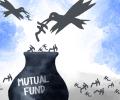
Mutual funds (MFs) are investing in more stocks despite the recent volatility. The industry invested in 824 companies across the listed universe as of October, according to primemfdatabase.com. The S&P BSE Sensex hit its all-time high of 62,245 that month. The index has since corrected to 57,864, around 7 per cent below the peak.

Jail inmates produced goods generating gross sales worth Rs 223.4 crore in 2020, according to the government's annual Prison Statistics India report. The amount ranks at 496th place if compared with the latest net sales numbers of S&P BSE 500 companies, reports Sachin P Mampatta.
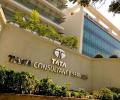
Tata Consultancy Services (TCS) - the largest information technology (IT) services provider in India and the second-largest globally - recently set an ambitious goal of $50 billion in revenue by 2030. The growth required to reach this goal, however, is lower than the company's own standards. In the past decade, TCS revenues, or net sales in US dollar terms, have grown at a compound annual growth rate (CAGR) of 9.5 per cent, from $10.2 in 2011-12, to an expected $25.3 billion during 2021-22 (FY22), based on its revenue trend in the first nine months of FY22.

There is widening gap between what the government's premier retirement fund makes on its investments and what it offers to employees. The Employees' Provident Fund Organisation (EPFO) makes the bulk of its investments in government-related securities. In other words, it lends to central and state governments and related entities. The interest it gets from these instruments is largely what it uses to pay interest to its subscribers.

A sharp sell-off in the Indian equities markets after a spike in crude oil prices should not be surprising. Historically there is a negative correlation between stock valuations in India and the price of Brent crude oil, which is the benchmark for the Indian crude oil basket. Between 2011 and 2014, crude oil traded above $100 a barrel for an extended period, the Sensex-trailing price/earnings (P/E) was 18X, on average, during the period, nearly 22 per cent lower than the current index P/E of 23X.

Indians spent more on foreign investments during the past 12 months than they have since at least 2012.
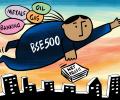
The biggest jump in earnings and decline in P/E multiples has occurred with top companies in metals and mining, corporate banking, and the oil and gas sectors.

Emerging markets such as India have always run higher inflation rates than developed economies such as the US and countries of Western Europe. But for the first time in the past 30 years, the US reported a higher consumer price inflation (CPI) rate than India in five consecutive months. The US reported a CPI rate of 7.5 per cent in January 2022 against 6.01 per cent in India and analysts expect the trend to continue for at least a few months more

The amount of money lying unclaimed with the Life Insurance Corporation of India dwarfs the budgets of many ministries. There was Rs 21,539.5 crore which lay unclaimed with India's largest insurance company, according to details in the initial public offer (IPO) document it filed over the weekend. The regulatory documentation is ahead of LIC selling shares to the public through the stock exchange for the first time this financial year. This will be India's largest ever public listing.

The biggest headwind to the consumption story in FY23 is a sharp decline in government subsidies on food, fertiliser and fuel, and overall decline in revenue expenditure net of interest payments. This, analysts say, will adversely impact purchasing power of households at the lower end of the income pyramid, translating into lower spending on consumer goods and services.

Owing to a big rise in the market capitalisation of group companies such as Adani Green Energy and Adani Transmission, the group promoters, the Gautam Adani family, have closed the wealth gap with Mukesh Ambani, the promoter and owner of Reliance Industries Ltd (RIL). Ambani continues to top India's billionaire league table. The Ambani family's net worth was estimated to be Rs 8.06 trillion (around $108 billion) on Tuesday against the Rs 6.87 trillion (around $92 billion) of the Adani family.

The group began to outperform the broader market only with the onset of the pandemic in March 2020 while earlier it was largely keeping pace with the Sensex. The group's market cap is up 164.4 per cent since the end of March 2020 against a 105 per cent rally in the Sensex.

Companies spent less money buying back their shares from the public last year than at any time since 2015. They announced buybacks of up to Rs 14,341 crore, show numbers from primary market tracker Prime Database. The total amount spent was Rs 13,597 crore. Both the amounts are lower than what was offered (Rs 39,564 crore) and spent (Rs 36,517 crore) in 2020.
 © 2026 Rediff.com - Advertise with us - Disclaimer - Privacy Policy - Sitemap - Feedback - About us - Terms of use - Grievances